
The Albanian Subjunctive Mood Is Highly Logical (Straightforward Breakdown)

Author
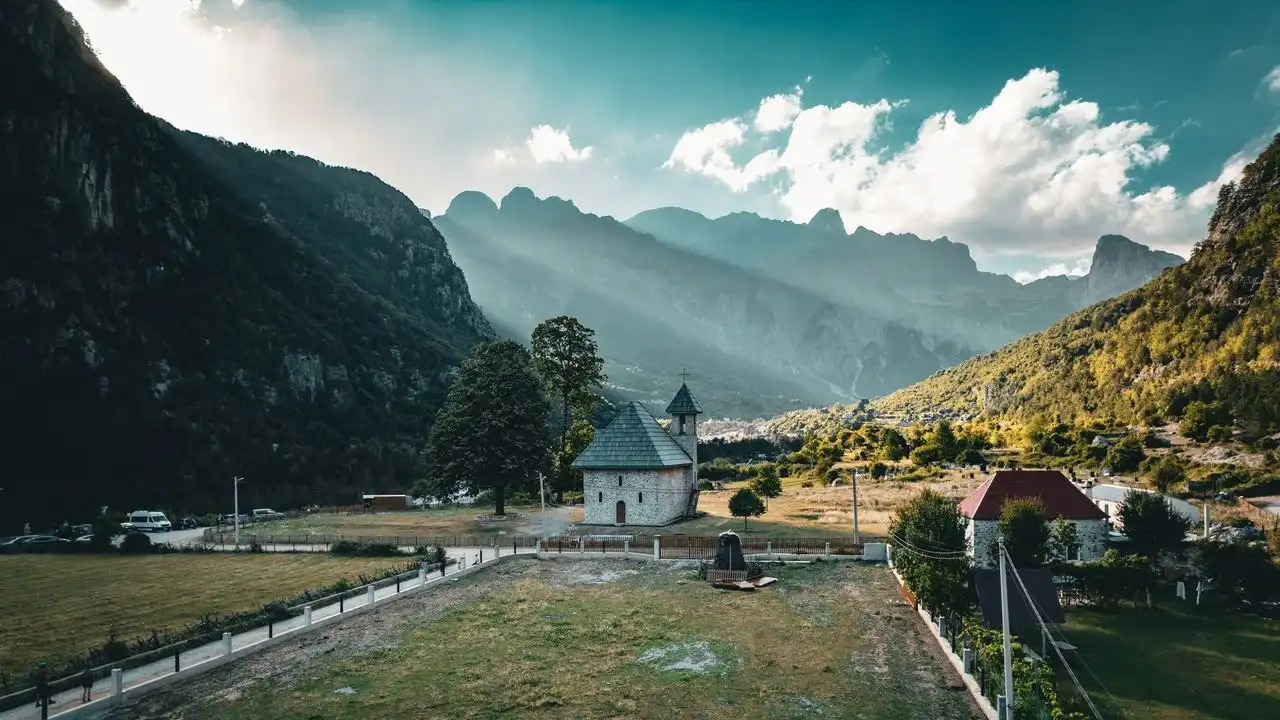
The Albanian subjunctive mood is one of the most logical grammar concepts you'll learn.

You use it constantly in everyday conversations to express wants, needs, and possibilities.

Unlike in Romance languages, the Albanian subjunctive doesn't require you to memorize an entirely new set of complex verb endings.

Instead, it relies on a simple particle word paired with present tense verbs.

I'll break down exactly how it works and show you how to form it right away.

<TOC>
**Table of Contents:**

1. [What the subjunctive mood is in Albanian](#whatisit)
2. [How to form the Albanian subjunctive](#formation)
3. [Conjugation table for a regular verb](#conjugation)
4. [Common trigger verbs](#triggers)
5. [Regional differences between Tosk and Gheg](#regional)
</TOC>

<a name="whatisit" />

## What the subjunctive mood is in Albanian

The subjunctive mood is called *mënyra lidhore* in Albanian. It's primarily used to connect two verbs together in a sentence.

In English, when we connect two verbs, we usually use the word "to" in between them. For example, we say "I want *to go*" or "I need *to sleep*".

Albanian doesn't have a true infinitive form of the verb in the standard language.

Instead of saying "I want to go", Albanians say "I want *that I go*".

The subjunctive mood provides that "that I go" structure.

Whenever you want to express a desire, an obligation, or a possibility, you'll use this mood.

<a name="formation" />

## How to form the Albanian subjunctive

Forming the subjunctive in Albanian is extremely straightforward.

You simply place the particle *të* directly in front of a present tense verb.

For most pronouns, the verb itself stays exactly the same as its normal present tense conjugation.

There are only two minor changes you need to remember.

When using the "ti" (you singular) pronoun, the verb usually takes a *-sh* ending. When using the "ai/ajo" (he/she) pronoun, the verb usually takes an *-ë* ending.

Everything else is identical to the present indicative tense you already know.

<a name="conjugation" />

## Conjugation table for a regular verb

To show you how predictable this is, let's look at the regular verb *punoj* (to work). Notice how the particle *të* sits before every verb form.

<Table>
  <thead>
    <tr>
      <th>Pronoun</th>
      <th>Subjunctive Form</th>
      <th>Literal Translation</th>
    </tr>
  </thead>
  <tbody>
    <tr>
      <td>Unë</td>
      <td>të punoj</td>
      <td>that I work</td>
    </tr>
    <tr>
      <td>Ti</td>
      <td>të punosh</td>
      <td>that you work</td>
    </tr>
    <tr>
      <td>Ai/Ajo</td>
      <td>të punojë</td>
      <td>that he/she works</td>
    </tr>
    <tr>
      <td>Ne</td>
      <td>të punojmë</td>
      <td>that we work</td>
    </tr>
    <tr>
      <td>Ju</td>
      <td>të punoni</td>
      <td>that you work</td>
    </tr>
    <tr>
      <td>Ata/Ato</td>
      <td>të punojnë</td>
      <td>that they work</td>
    </tr>
  </tbody>
</Table>

<a name="triggers" />

## Common trigger verbs

Certain verbs in Albanian will almost always trigger the subjunctive mood.

The three most common ones you'll use are *dua* (I want), *duhet* (must/need), and *mund* (can).

Here's how you use the subjunctive with the verb *dua*.

<Dialogue english="I want to sleep." transliteration="Dua tuh flee.">
Dua të fle.
</Dialogue>

<Dialogue english="She wants to work." transliteration="Ajo do tuh pu-noy-uh.">
Ajo do të punojë.
</Dialogue>

The verb *duhet* is impersonal, meaning it never changes form when expressing "must".

You simply say *duhet* followed by the subjunctive form of the action you need to do.

<Dialogue english="We must go." transliteration="Doo-het tuh shkoy-muh.">
Duhet të shkojmë.
</Dialogue>

<Dialogue english="You must eat." transliteration="Doo-het tuh hash.">
Duhet të hash.
</Dialogue>

You use the exact same structure for the verb *mund* to express ability or possibility.

<Dialogue english="Can you help me?" transliteration="A moond tuh muh ndih-mosh?">
A mund të më ndihmosh?
</Dialogue>

<a name="regional" />

## Regional differences between Tosk and Gheg

Albanian has two main dialect groups known as Tosk in the south and Gheg in the north.

Standard Albanian is heavily based on the Tosk dialect.

The subjunctive structure using the particle *të* is the standard way to speak and write. However, Gheg speakers often bypass the subjunctive entirely.

Instead, they use a true infinitive structure constructed with the word *me* plus the participle of the verb.

If a person from the south wants to say "I want to work," they use the subjunctive.

<Dialogue english="I want to work. (Standard/Tosk)" transliteration="Dua tuh pu-noy.">
Dua të punoj.
</Dialogue>

If a person from the north wants to say the same thing, they'll likely use the infinitive.

<Dialogue english="I want to work. (Gheg)" transliteration="Doo meh poo-noo.">
Du me punu.
</Dialogue>

Both versions are perfectly understood everywhere Albanian is spoken.

As a learner, you should focus entirely on mastering the standard *të* subjunctive first.

Once you're comfortable with the standard subjunctive, understanding the northern *me* structure will be effortless.